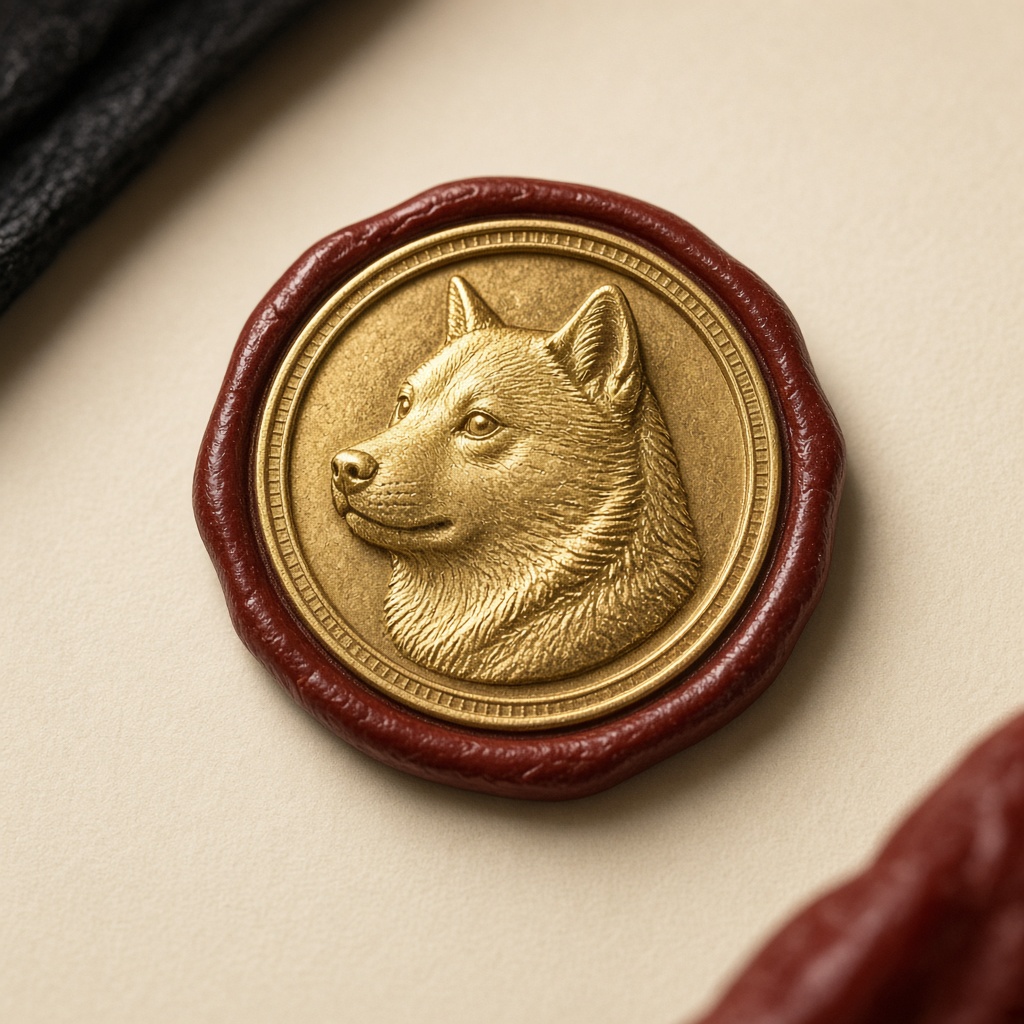
 Suchdoginals
Doginals are Dogecoin’s answer to Bitcoin Ordinals: a way to treat the smallest pieces of the money as ordered objects and to attach arbitrary bytes — images, text, JSON — to those objects. The first numbered inscription in the Apezord lineage, Shibescription #0, is dated 24 February 2023. DRC-20 arrived weeks later as a token dialect written in the same envelopes.
What the word names
Three things get called Doginals, and they should stay apart. First, a numbering theory: each Shibe can be ordered by when it was mined and how it later moved. Second, an inscription practice: bytes placed in a script envelope so that an indexer can bind those bytes to a shibe. Third, a market: JPEGs, GIFs, and DRC-20 tickers traded as if the node software knew their names. It does not.
Dogecoin consensus validates value and scripts. It does not number shibes and does not care about JSON. Doginals are a social consensus layered on a monetary consensus. If that sentence feels like a warning, it is working.
February 2023
Bitcoin Ordinals had just made on-chain media fashionable. Apezord published a minter and a protocol note at github.com/apezord/doginals. The note is short and complete enough to found a culture: an inscription is a series of push-data values beginning with the string ord; content may split across pushes; P2SH holds the redeem script; later transactions may continue a payload by counting a separator down to zero.
The README’s joke — data inscribed onto “subwoofers” — is the only Comic Sans the protocol itself allowed. Everything after is tooling, indexing, and argument.
The doginals protocol allows any size data to be inscribed onto subwoofers.apezord/doginals README, 2023
Why Dogecoin
One-minute blocks and low fees made inscription feel like posting, not like buying a plaza on-chain. That is the gift and the flood. Bitcoin’s fee market rationed JPEGs. Dogecoin invited them. The same cheapness made DRC-20 minting a sport, then a mess, then a pair of competing ledgers.
Dogecoin also lacked Taproot, the Bitcoin upgrade Ordinals used for compact envelopes. Apezord’s P2SH design is the adaptation: not a copy of Rodarmor’s witness inscription, a cousin that fits the chain that actually existed.
After #0
Image and text shibescriptions accumulated first. Then someone inscribed a deploy for $DOGI (21 million, 11 March 2023). Transfers stalled because honest shibe indexing must survive random early subsidies. Infrastructure houses — notably Doge Labs — published indexers that start at genesis. Other wallets started in May. Cardinals arrived as a rival stack. We treat this not as a single “era of Dogecoin NFTs” but as a fork diagram.
Questions
Are Doginals NFTs?
Colloquially, image inscriptions are traded like NFTs. Technically they are data bound to UTXOs by indexer convention, not ERC-721 contracts. DRC-20 tokens are even further from that metaphor: they are balance updates in a notebook.
Do I need a special node?
You need a Dogecoin node or an API to broadcast transactions, plus a Doginals-aware wallet or indexer to see inscriptions. A stock node will happily ignore the art.
Is there one official Doginals standard?
Apezord’s envelope is the founding text. Numbering, transfer rules, and DRC-20 first-seen-wins depend on which indexer you trust. See indexers and social consensus.
Sources
Primary texts for this chapter. The full index lives on Doginals sources.
- apezord/doginals — GitHub
- About Doginals — Doge Labs